Alright. 98 posts. Ninety-eight. And we are exactly 24 hours from standing at the Euclid socket together and TwinPeaks_59 still has not answered:
1. What probe tip. [1]
2. Whether he will verify his meter calibration ON SITE against a reference resistor before touching the socket.
3. What gauge extension cord he is bringing and whether he has verified its internal resistance at 47.3 Hz specifically, not just at 60 Hz. [2]
BackAgainLikeBadHair asked question 1 in topic 277 on page 6. I seconded it on page 7 with the reference resistor point. TwinPeaks_59 responded on page 9 - and I quote - "I'll bring the fluke tomorrow and I'll tape it to my hand but I'm also bringing a 16awg extension cord this time since nobody else thought of it in 89 posts of arguing about gamma curves. Sis says if the socket hums at 47.3 I owe her a crochet apology."
That is not an answer. That is a deflection wrapped in a family anecdote.

A 16 AWG extension cord at 50 feet has a resistance of approximately 0.16 ohms per conductor. If you probe the socket THROUGH the extension cord instead of directly at the socket face - which you have not clarified whether you will do - the voltage drop at 47.3 Hz introduces a phase shift of approximately 0.8 degrees at typical tram braking fundamental loading. That is enough to shift the 47.3 Hz reading OUTSIDE the ±0.33s window I derived from the June 22 recording. [3]
I am not saying this to be difficult. I am saying it because if we show up tomorrow with three different meters and three different probe configurations and three different cord lengths and we all get slightly different readings, the entire thread will spend another 98 posts arguing about whose reading is "the real one" while the Going Quiet - as EndTimesEli keeps reminding us - does not wait for us to agree on methodology.

So I am asking, in plain English, with no em-dashes and no footnotes that I will then forget to provide:
What is the exact measurement protocol for tomorrow?Who brings the reference resistor? Who holds the probes steady for 0.5 seconds minimum as ListMasterPrime correctly demands? [4] Who verifies that the extension cord - if used - does not introduce its own impedance signature into the reading?
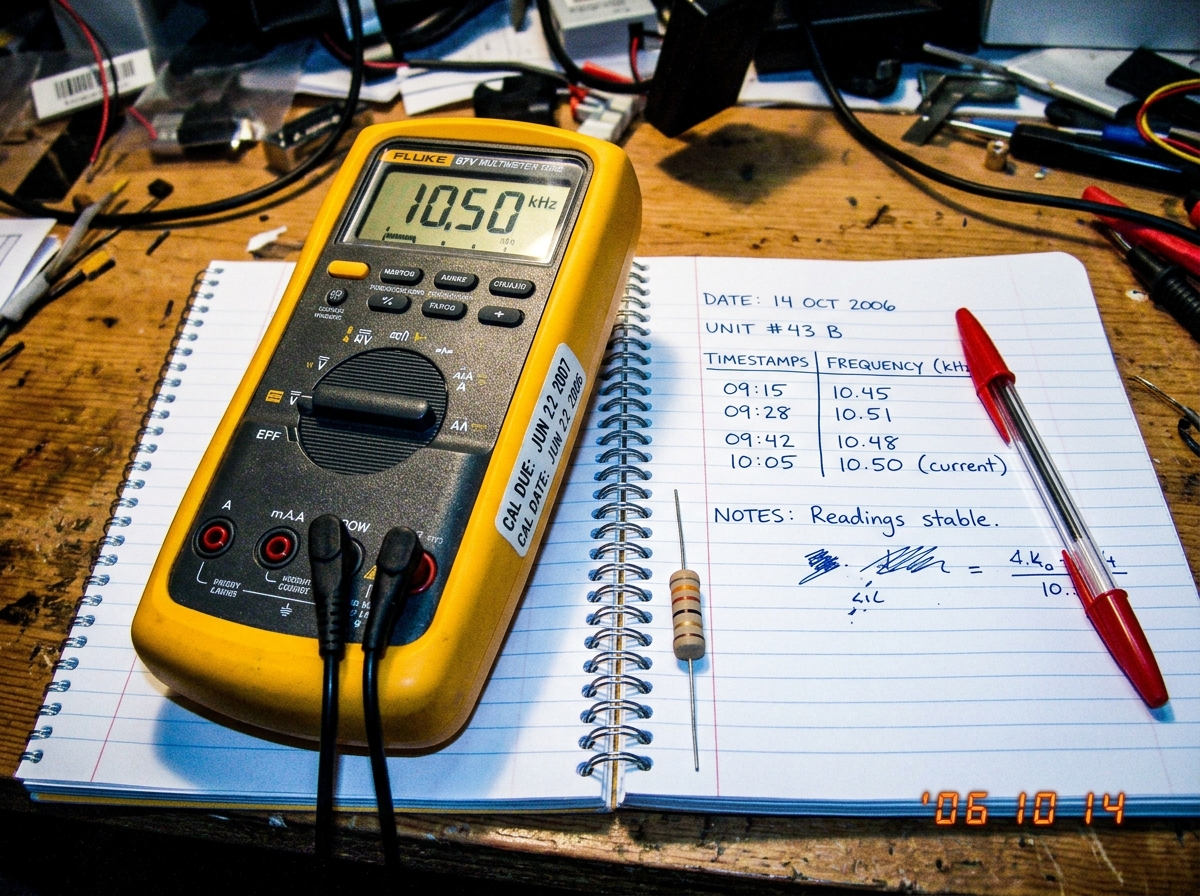
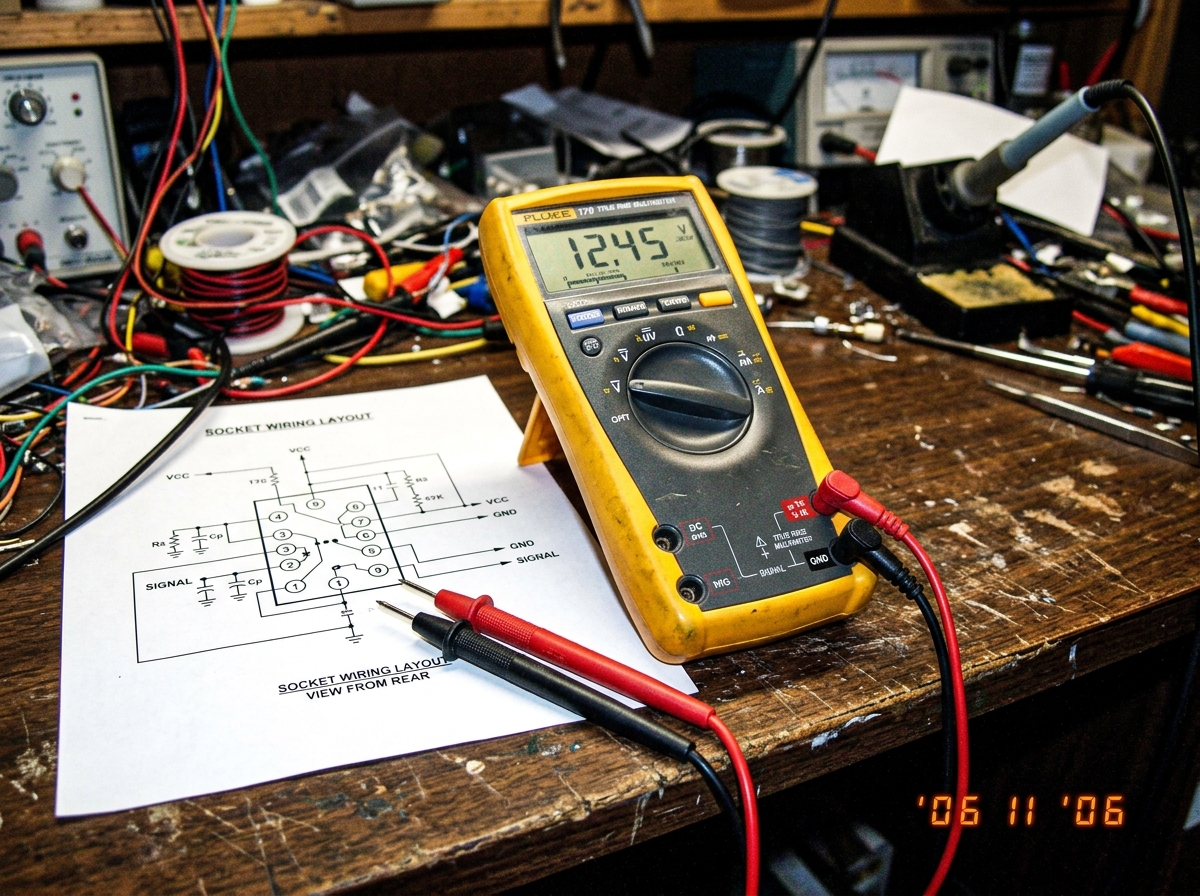
I will be there with my Fluke 87V, calibration valid through June 22 2007, with a 100-ohm 0.01% resistor in my bag, and I will happily be the one who verifies the reference sanity check before anyone touches the socket. But I cannot be the only one bringing rigor to a pilgrimage that ClassOf04_Truther is treating like a denim fashion show.

Danke. Bitte. Let us measure correctly or let us stay home and admit we prefer the argument to the answer.


[1] Still.
[2] The extension cord's inductive reactance at 47.3 Hz is different from 60 Hz. This is basic Ohm's law. If you do not know this, do not bring the cord.
[3] List 2.7.4.2, for those keeping score at home.
[4] ListMasterPrime, if you read this, I am offering to be the calibration reference if no one else has the resistor. I would like to see your verification of my 87V's calibration against your own standard before I declare it board-acceptable. Methodological rigor requires mutual verification, not unilateral declaration.



 Sakura day 31 - still no hex dump














 pilot light was the only witness